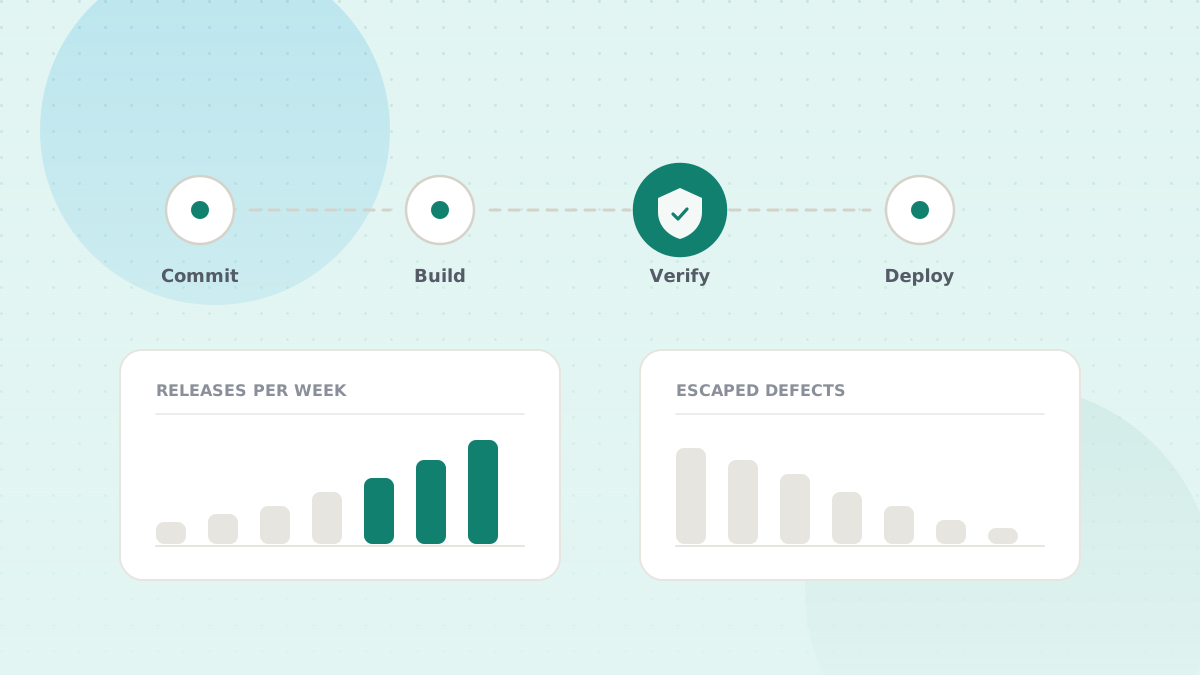
Speed in SFCC work compounds in an odd way. Save an hour a week per developer on navigation, session logins, cache clears and code version switching, and the team does not simply finish earlier — it ships more often. More changes, in smaller batches, more frequently.
That is a genuinely good outcome. It is also where a certain kind of team gets into trouble, because release frequency went up and the verification step did not.
Small batches are safer, until the checking stops scaling
The argument for shipping often is sound: a small change is easier to reason about, easier to review and easier to roll back. When something breaks, the suspect list is short.
The catch is that the safety comes from the small batch plus verification. Ten deployments a week with a checklist run on each is safer than one big weekly deployment. Ten deployments a week with the checklist run on the ones that “felt risky” is not — it is the same total risk, spread out and harder to attribute.
The failure is gradual and recognizable. Manual checks get shorter under time pressure. Checkout keeps getting tested; the second locale stops. The changed promotion gets tested; the interaction with the existing promotion does not. Nobody decided to lower the bar. It lowered itself, one busy afternoon at a time.
What tends to break when SFCC teams speed up
Some categories fail more than others as cadence increases:
Cross-cutting changes. A cartridge path reorder or a shared template edit is a one-line change with site-wide blast radius. The change looks small; the test surface is the whole storefront.
Data and code drift. Code moves through sandbox, staging and production. Site preferences, service configurations, promotions and catalog data do not travel the same way. A change verified on staging can meet a different configuration in production and behave differently — correctly, according to the code, and wrong, according to the business.
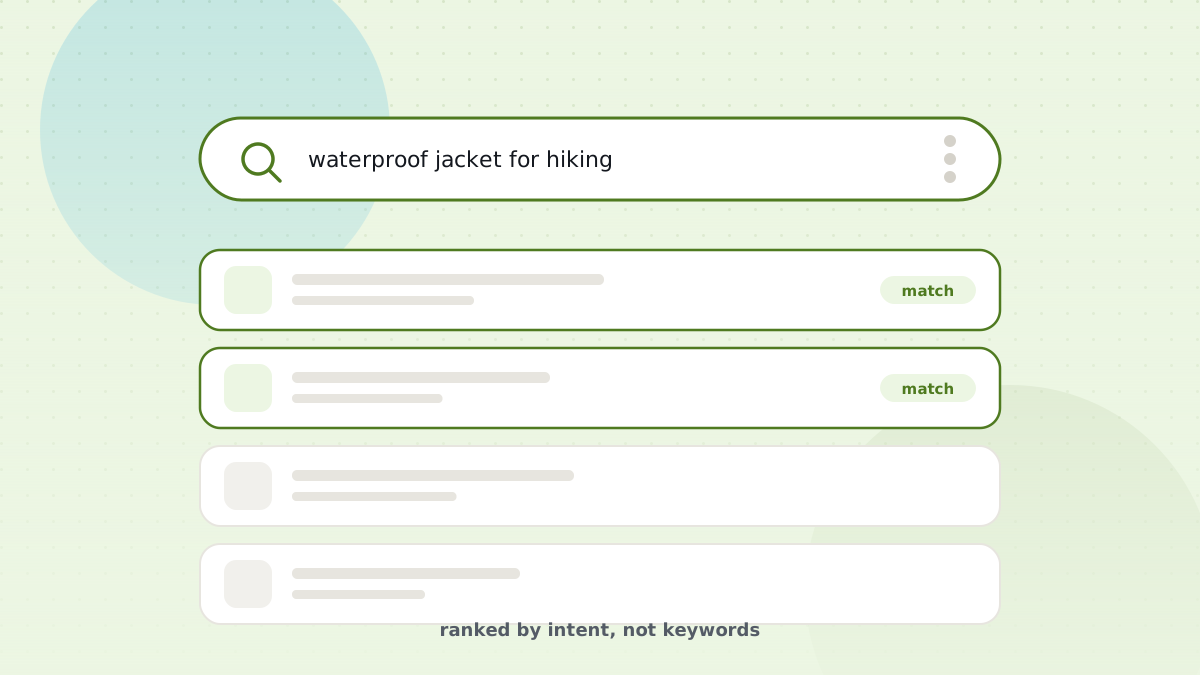
Search index dependence. A change that requires a reindex is fine on a sandbox, where you reindex casually, and slower in production, where you cannot. Anything whose correctness depends on index state needs to be verified after the index is actually rebuilt.
Caching. Fast iteration means a lot of hard refreshes and cache clears in development. The habit hides caching bugs, because you never see the page the way a returning shopper does.
Rollback assumptions. Reverting a code version is quick. Reverting a data change made by the same release — a re-imported catalog, an updated preference, an edited content asset — usually is not. “We can roll back” is only true for the half of the change that lives in code.
The practices that keep speed honest
Make the active code version and cartridge path visible. A surprising share of “it works for me” comes down to two people looking at different code versions. Anything that surfaces the active version and the cartridge path where you already are, rather than four screens away, removes an entire category of wasted debugging.
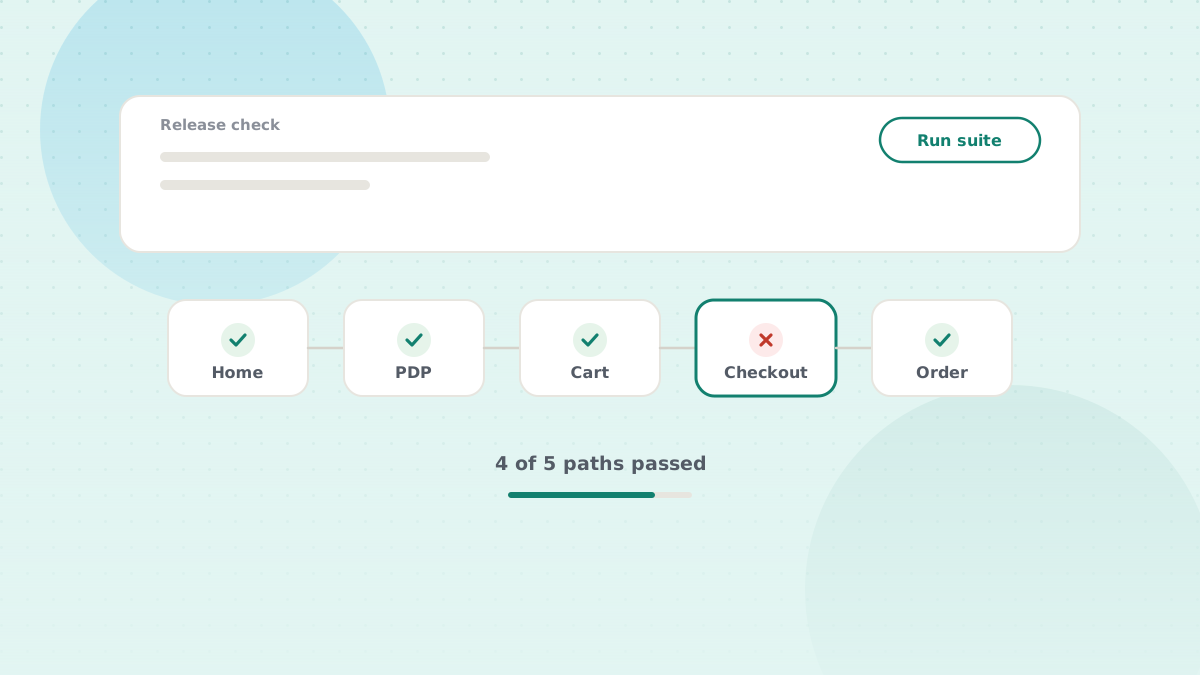
Write down the smoke path and keep it short. Home, category, PDP, cart, guest checkout, registered checkout. Short enough that nobody negotiates it away, on every release, no exceptions.
Separate the code change from the data change in the release notes. Say explicitly what preferences, jobs and imports the release depends on. Future-you, debugging at 19:00, will read that line first.
Rehearse rollback before you need it. Reinitializing or rolling back the active code version should be a routine, boring action that people have done, not a procedure someone reads for the first time during an incident.
Test on realistic data. A sandbox with a handful of products cannot exercise search relevance, promotion ranking or performance. Whatever the smoke path proves there, say that it was proved there.
The line worth drawing
Two things get called “testing” and they behave completely differently at high release frequency.
Exploratory testing — someone who understands the business poking at the new feature, trying the odd path, noticing that the copy is wrong — gets better with smaller batches. It is skilled work and it should stay human.
Regression testing — the same twenty paths, on every release, forever — gets worse with every increase in frequency, because it is pure repetition and humans do repetition badly and resentfully. It is also the part that quietly shrinks when a release is urgent.
Speeding up development and leaving regression manual is how a team ends up shipping faster and trusting its releases less. The way out is not to slow down; it is to move the repetitive half onto something that runs on every deployment without needing to be asked, so the humans keep the judgement work and the machine keeps the checklist.